NAOTSUGU YOSHIDA
AVAilable pieces

Japanese ceramic
White pearly glaze over white porcelain body, silver edging.
Ø 8 cm • h. 6,5 cm
Ø 3 5⁄32 inch. • h. 2 9⁄16 inch.
Stock
4 unique items
–
Handwash only. Microwave forbidden.
All pieces are handmade and unique. Slight variations in color, shape and size might occur.

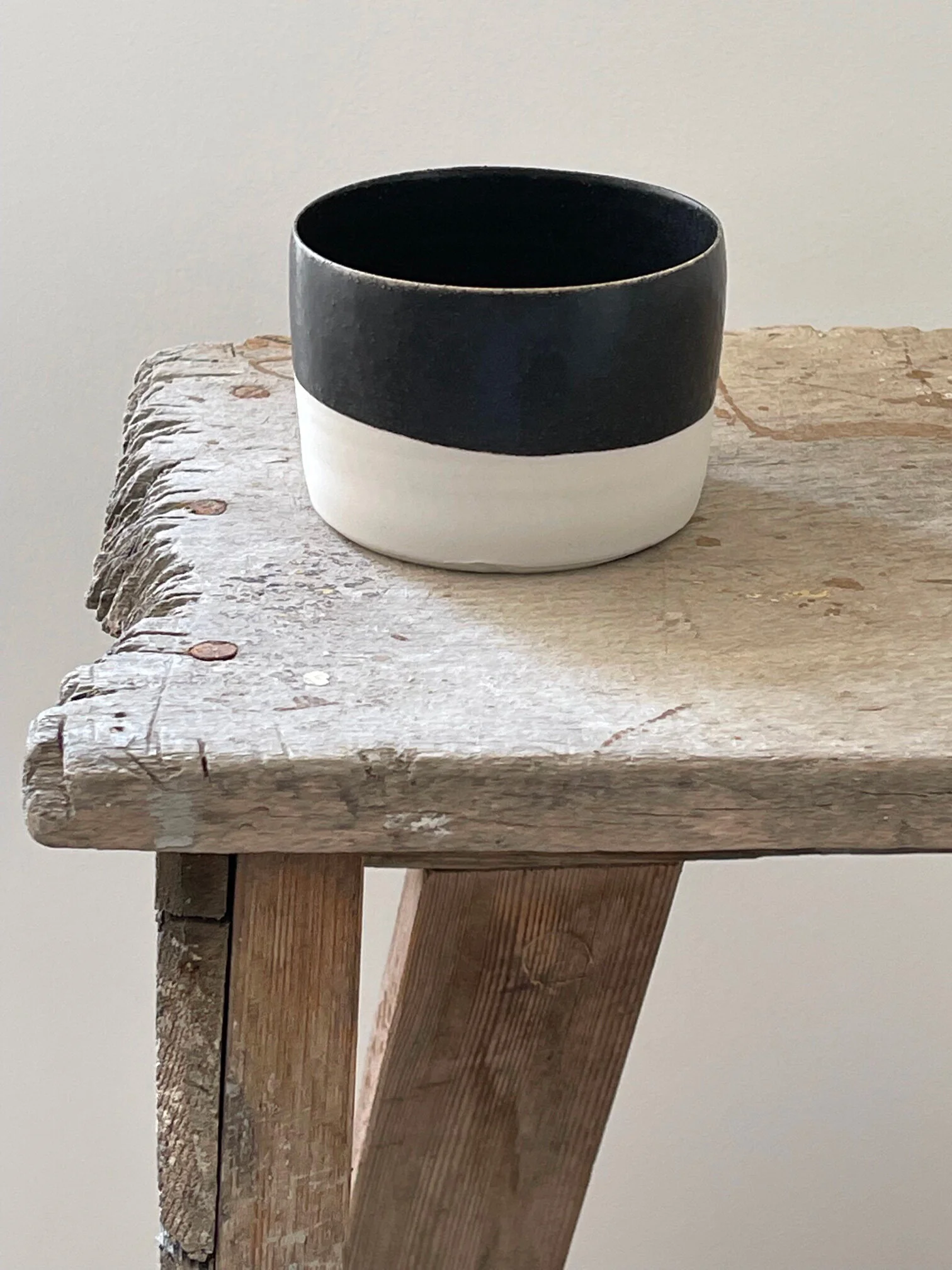
Japanese ceramic
Black glaze over white porcelain body, beige speckled effect on some pieces.
Ø 7,5 cm • h. 5,5 cm
Ø 2 61⁄64 inch. • h. 2 11⁄64 inch.
Stock
5 unique items
–
Hand-wash only. Microwave forbidden.
All pieces are handmade and unique. Slight variations in color, shape and size might occur.

Japanese ceramic
Black glaze over white porcelain body.
Ø 11 cm • h. 8,5 cm
Ø 4 21⁄64 inch. • h. 3 11⁄32 inch.
Stock
6 unique items
–
Hand-wash only. Microwave forbidden.
All pieces are handmade and unique. Slight variations in color, shape and size might occur.

Japanese ceramic
White pearly glaze over white porcelain body, silver edging.
Ø 12,5 cm • h. 10 cm
Ø 4 59⁄64 inch. • h. 3 15⁄16 inch.
Stock
3 unique items
–
Handwash only. Microwave forbidden.
All pieces are handmade and unique. Slight variations in color, shape and size might occur.

Japanese ceramic
Black glaze over white porcelain body.
Ø 7,5 cm • h. 6,5 cm
Ø 2 61⁄64 inch. • h. 2 9⁄16 inch.
Stock
4 unique items
–
Hand-wash only. Microwave forbidden.
All pieces are handmade and unique. Slight variations in color, shape and size might occur.
about
Lives and works close to Mount Fuji, Japan.
What is striking in Naotsugu Yoshida's work is the accuracy and formal purity, the ideal drawing of the curves, the astonishing mastery of the circle and the volume. His approach is resolutely contemporary: he takes hold of tradition to reinterpret it, combining the Eastern and Western codes. Radical, he gets so close to the idea of perfection that one holds one's breath. He pushes the shape, extends the limits of the matter, creates a tension that approaches the breaking point but like an equilibrist finds its ideal posture. Naotsugu Yoshida also masters the art of constraint, he restricts the spectrum of colors in a highly cerebral position. In this sense, he may well take over Mies van der Rohe 's famous formula : "Less is more".


