Kansai Noguchi
hier, aujourd’hui : Jōmon
May 29th, 2021 — June 19th, 2021
Born in Fukuoka, Kansai Noguchi created his pottery studio in 2016 close to Tokyo, after spending some time in the US.
This journey to New York gave him the opportunity to connect archaic culture with modernity, after deepening his knowledge of the work of Isamu Noguchi.
His practice is now clearly inspired by Jōmon culture and Greek antiquity, which he revisits in a search for form, balance, and lightness, thus paving the way for a more contemporary re-reading of Japanese culture.

Viewing Room

Online purchase

Japanese ceramic.
Inspired by Jomon earthenware, its surface is made by repeatedly applying a metallic glaze on top of the clay, wiping it off, and polishing it to reproduce the aging process.
Yakishime pottery, whose origin dates back to the end of the 12th century in Japan, is based on unglazed firing at temperatures above 1200 degrees, which vitrifies the clay while making it extremely hard.
Dimensions
Ø 15 cm • h. 20,5 cm
Ø 529⁄32 inch. • h. 85⁄64 inch.
Stock
Unique
—
All pieces are handmade and unique. Slight variations in color, shape and size might occur.
Handwash only. Microwave forbidden.

Japanese ceramic.
Inspired by Jomon earthenware, its surface is made by repeatedly applying a metallic glaze on top of the clay, wiping it off, and polishing it to reproduce the aging process.
Yakishime pottery, whose origin dates back to the end of the 12th century in Japan, is based on unglazed firing at temperatures above 1200 degrees, which vitrifies the clay while making it extremely hard.
Dimensions
Ø 8,5 cm • h. 12,5 cm
Ø 311⁄32 inch. • h. 459⁄64 inch.
Stock
Unique
—
All pieces are handmade and unique. Slight variations in color, shape and size might occur.
Handwash only. Microwave forbidden.

Japanese ceramic.
Inspired by Jomon earthenware, its surface is made by repeatedly applying a metallic glaze on top of the clay, wiping it off, and polishing it to reproduce the aging process.
Yakishime pottery, whose origin dates back to the end of the 12th century in Japan, is based on unglazed firing at temperatures above 1200 degrees, which vitrifies the clay while making it extremely hard.
Dimensions
Ø 7 cm • h. 21 cm
Ø 23⁄4 inch. • h. 817⁄64 inch.
Stock
Unique
—
All pieces are handmade and unique. Slight variations in color, shape and size might occur.
Handwash only. Microwave forbidden.

Japanese ceramic.
Double-sided pattern.
Inspired by Jomon earthenware, its surface is made by repeatedly applying a metallic glaze on top of the clay, wiping it off, and polishing it to reproduce the aging process.
Yakishime pottery, whose origin dates back to the end of the 12th century in Japan, is based on unglazed firing at temperatures above 1200 degrees, which vitrifies the clay while making it extremely hard.
Dimensions
Ø 7,5 cm • h. 13,5 cm
Ø 261⁄64 inch. • h. 55⁄16 inch.
Stock
Unique
—
All pieces are handmade and unique. Slight variations in color, shape and size might occur.
Handwash only. Microwave forbidden.

Japanese ceramic.
Inspired by Jomon earthenware, its surface is made by repeatedly applying a metallic glaze on top of the clay, wiping it off, and polishing it to reproduce the aging process.
Yakishime pottery, whose origin dates back to the end of the 12th century in Japan, is based on unglazed firing at temperatures above 1200 degrees, which vitrifies the clay while making it extremely hard.
Dimensions
Ø 9 cm • h. 17 cm
Ø 335⁄64 inch. • h. 611⁄16 inch.
Stock
Unique
—
All pieces are handmade and unique. Slight variations in color, shape and size might occur.
Handwash only. Microwave forbidden.

Japanese ceramic.
Inspired by Jomon earthenware, its surface is made by repeatedly applying a metallic glaze on top of the clay, wiping it off, and polishing it to reproduce the aging process.
Yakishime pottery, whose origin dates back to the end of the 12th century in Japan, is based on unglazed firing at temperatures above 1200 degrees, which vitrifies the clay while making it extremely hard.
Dimensions
Ø 7,5 cm • h. 17 cm
Ø 261⁄64 inch. • h. 611⁄16 inch.
Stock
Unique
—
All pieces are handmade and unique. Slight variations in color, shape and size might occur.
Handwash only. Microwave forbidden.

Japanese ceramic.
Inspired by Jomon earthenware, its surface is made by repeatedly applying a metallic glaze on top of the clay, wiping it off, and polishing it to reproduce the aging process.
Yakishime pottery, whose origin dates back to the end of the 12th century in Japan, is based on unglazed firing at temperatures above 1200 degrees, which vitrifies the clay while making it extremely hard.
Dimensions
Ø 8 cm • h. 16 cm
Ø 35⁄32 inch. • h. 619⁄64 inch.
Stock
Unique
—
All pieces are handmade and unique. Slight variations in color, shape and size might occur.
Handwash only. Microwave forbidden.

Japanese ceramic.
Inspired by Jomon earthenware, its surface is made by repeatedly applying a metallic glaze on top of the clay, wiping it off, and polishing it to reproduce the aging process.
Yakishime pottery, whose origin dates back to the end of the 12th century in Japan, is based on unglazed firing at temperatures above 1200 degrees, which vitrifies the clay while making it extremely hard.
Dimensions
Ø 7,5 cm • h. 20 cm
Ø 261⁄64 inch. • h. 77⁄8 inch.
Stock
Unique
—
All pieces are handmade and unique. Slight variations in color, shape and size might occur.
Handwash only. Microwave forbidden.
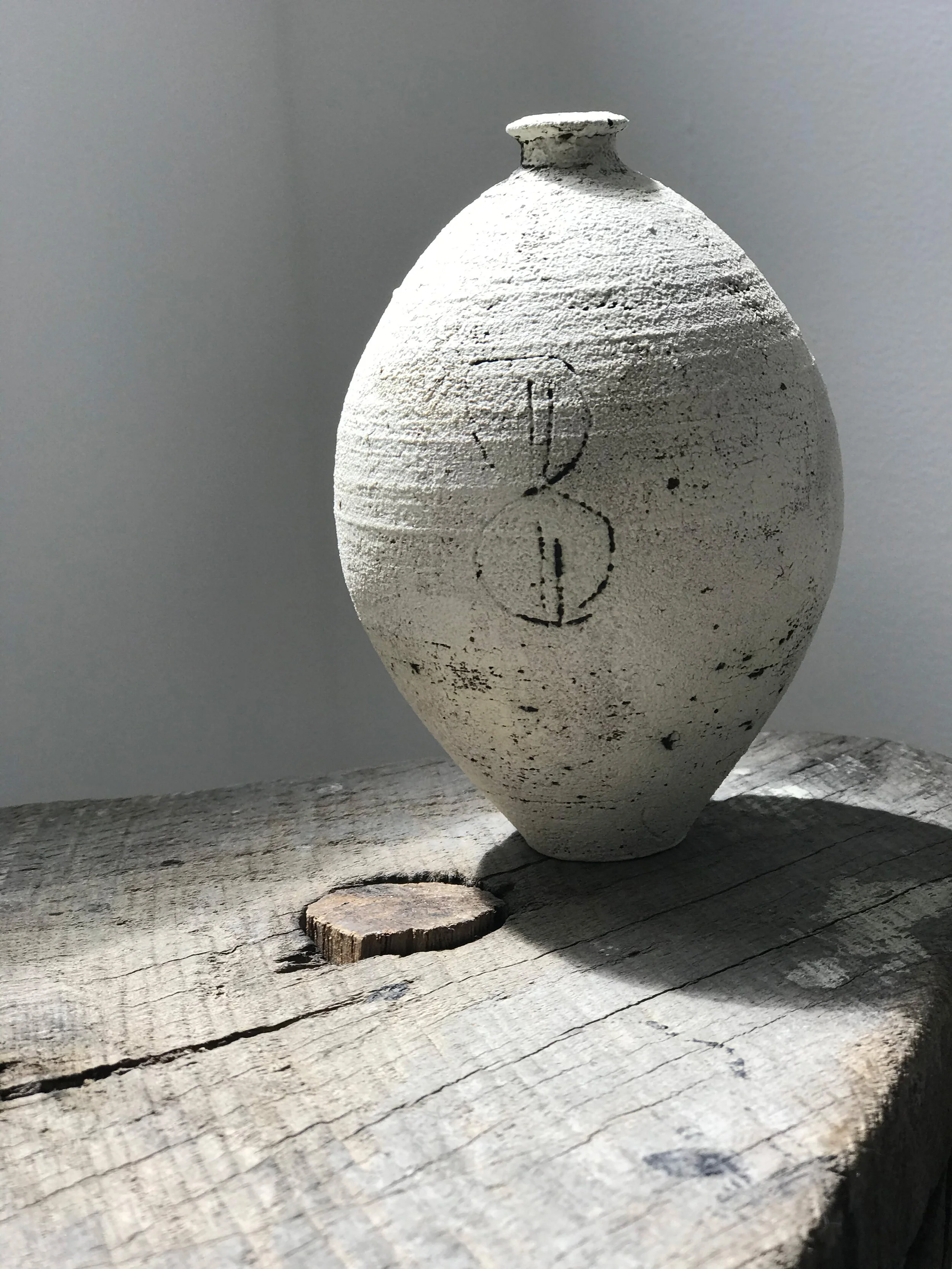
Japanese ceramic.
Double-sided pattern.
Inspired by Jomon earthenware, its surface is made by repeatedly applying a metallic glaze on top of the clay, wiping it off, and polishing it to reproduce the aging process.
Yakishime pottery, whose origin dates back to the end of the 12th century in Japan, is based on unglazed firing at temperatures above 1200 degrees, which vitrifies the clay while making it extremely hard.
Dimensions
Ø 7,5 cm • h. 11 cm
Ø 261⁄64 inch. • h. 421⁄64 inch.
Stock
Unique
—
All pieces are handmade and unique. Slight variations in color, shape and size might occur.
Handwash only. Microwave forbidden.

Japanese ceramic.
Inspired by Jomon earthenware, its surface is made by repeatedly applying a metallic glaze on top of the clay, wiping it off, and polishing it to reproduce the aging process.
Yakishime pottery, whose origin dates back to the end of the 12th century in Japan, is based on unglazed firing at temperatures above 1200 degrees, which vitrifies the clay while making it extremely hard.
Dimensions
Ø 9,5 cm • h. 21 cm
Ø 347⁄64 inch. • h. 817⁄64 inch.
Stock
Unique
—
All pieces are handmade and unique. Slight variations in color, shape and size might occur.
Handwash only. Microwave forbidden.
